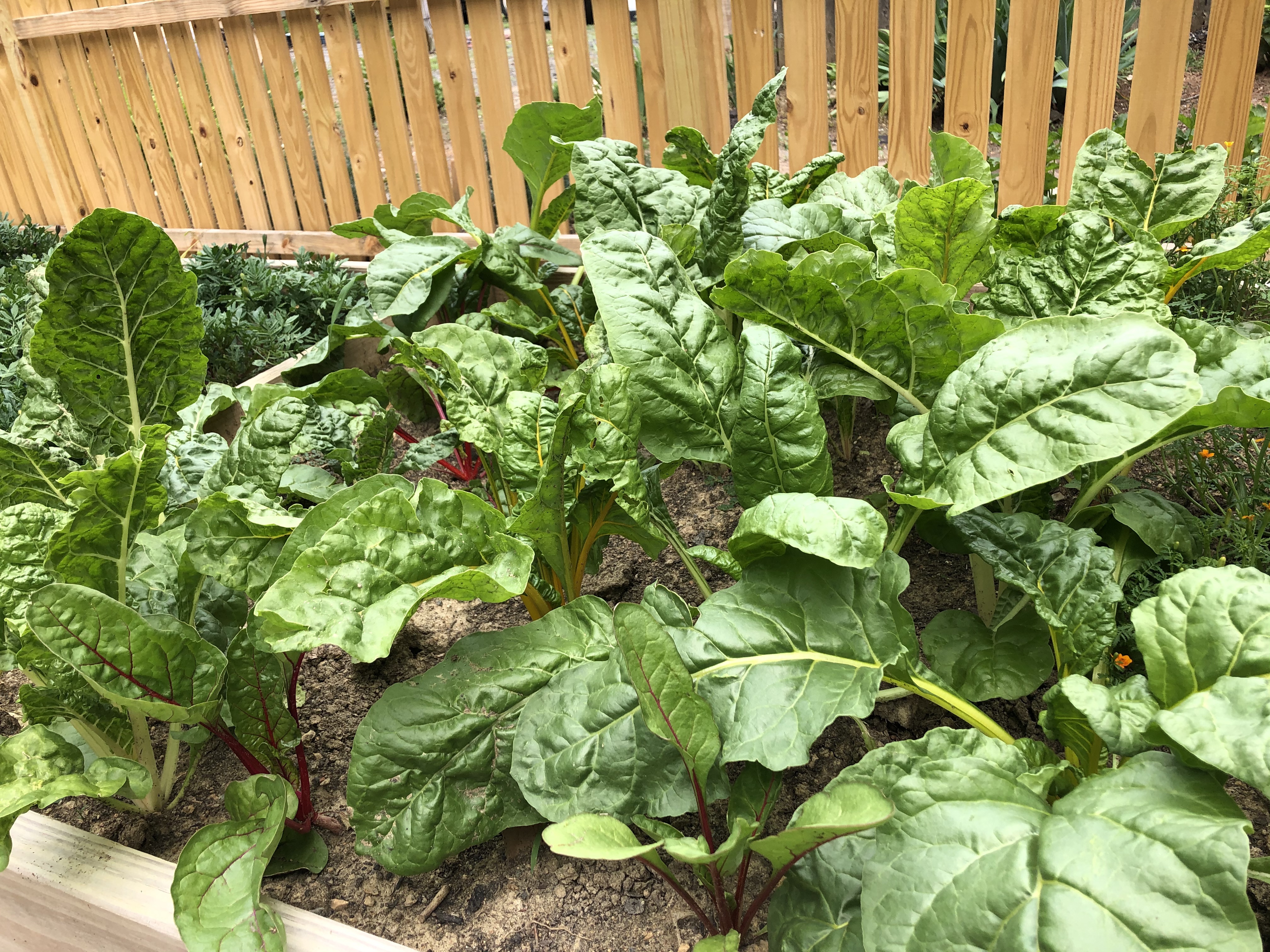
If there’s one vegetable that earns its keep in the garden, it’s Swiss chard. It’s easy to grow, remarkably resilient, and one of the few things that can keep the garden looking alive and productive when much of everything else has called it a season.
Swiss chard is particularly well suited to cooler weather — especially here in Front Royal, Virginia. It tolerates frost, can continue producing well into winter in milder climates, and doesn’t require much fuss once established. Give it some decent soil, a little sunlight, and occasional watering, and it’ll happily keep putting out new leaves. Better yet, you can harvest the outer leaves as needed while allowing the center of the plant to continue growing. It’s the gift that keeps on giving.
There’s plenty to like about chard beyond its hardiness, too. It’s packed with vitamins A, C, and K, along with magnesium, potassium, iron, and fiber. The leafy greens are a welcome addition to winter meals, whether sautéed with garlic, tossed into soups, folded into an omelet, or simply cooked down with a little olive oil.
And then there’s the aesthetics. With its deep green leaves and colorful stems—ranging from bright yellow to ruby red—Swiss chard brings a welcome splash of color to an otherwise sleepy winter garden.
For relatively little effort, you get a vegetable that’s productive, nutritious, attractive, and surprisingly forgiving. Not a bad return on a handful of seeds.